
AI is changing the way brands market themselves at an incredible pace. From generating imagery and video to writing copy, personalising communications and creating new ways for customers to interact with brands, the possibilities seem almost endless. But as more of our marketing becomes automated, it raises an interesting question: what makes an experience feel genuinely human?
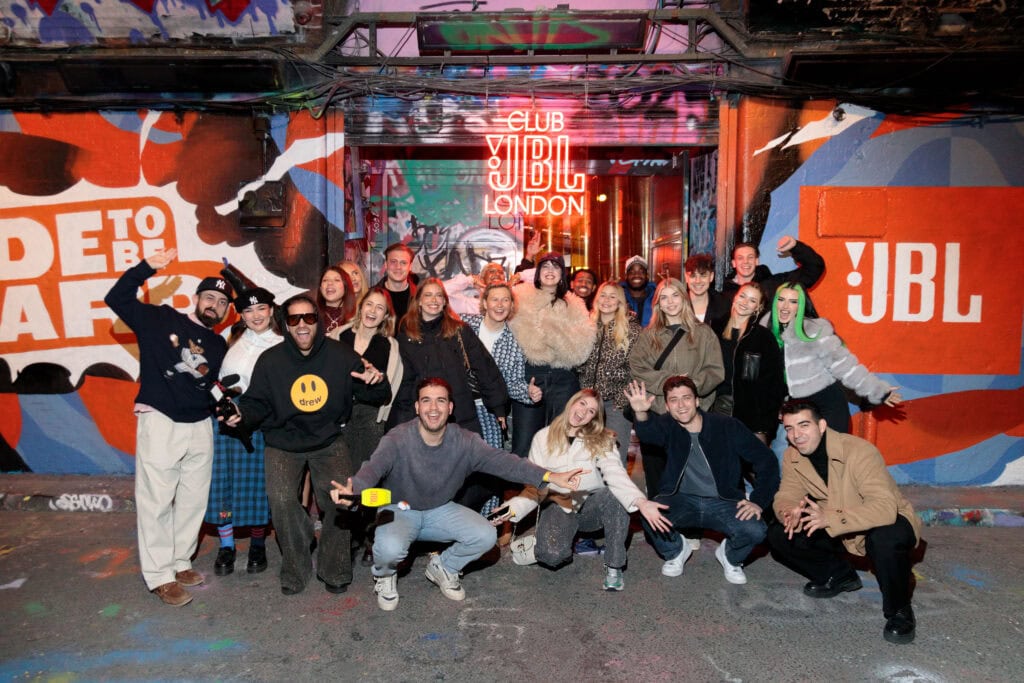
At a time when brands can produce more content, quicker and at a lower cost, real-world experiences (such as brand activations) have the potential to become even more valuable. There is something fundamentally different about meeting someone face-to-face, discovering a product in person, having an unexpected interaction or sharing a moment with other people. These are experiences that can’t simply be replicated by another piece of content appearing in a feed.
The value of being there
AI can create incredibly realistic images, videos and campaigns, but an experience is about more than what someone sees. It is about how they feel while experiencing it by discovering that product at a pop-up, trying it for yourself and having a conversation with someone who genuinely knows about it creates a very different kind of connection.
Experiential marketing gives brands the opportunity to create those moments. People can see and interact with something rather than simply being asked to watch another advert. The experience becomes something they have actively taken part in.
And this doesn’t mean digital becomes less relevant. Some of the strongest brand experiences now work across both physical and digital channels. A great activation can create the moment in real life, while TikTok, Instagram and other social platforms allow that moment to travel further. The key is making sure the physical experience is strong enough to stand on its own, rather than designing something purely for the camera.
Personalisation isn’t the same as being personal
One of the biggest opportunities AI offers brands is personalisation. Technology can help businesses understand their audiences, tailor messaging and create experiences that respond to individual preferences. Used well, this can make an activation feel more relevant and engaging.
But there is a difference between something being personalised and something feeling personal. Technology might know your name or recommend a product based on your behaviour, while a real person can notice your reaction, respond to your questions and adapt the conversation in the moment. That spontaneity is often what makes an interaction memorable. This is where experiential marketing has a real advantage. Not everything needs to be perfectly scripted or automated. Sometimes the moments people remember most are the ones that happen naturally – a funny conversation, an unexpected reaction or discovering something you weren’t expecting.
Where does AI fit in?
This isn’t an argument for removing technology from experiential marketing. AI has an important role to play when it genuinely improves the experience. It can support personalisation, interactive installations, content creation and event planning.
The question is less about whether brands should use AI and more about why they are using it. If technology makes an experience more useful, relevant or engaging, it can be incredibly powerful. If it is being added simply because it is new, there is a risk that the technology becomes the talking point and the actual experience gets lost.
There is also the question of originality. If everyone has access to the same AI tools, we may start to see more campaigns that look and feel the same. In that environment, a genuinely distinctive idea and a strong human interaction can become an even greater point of difference.
Making space for something real
As AI becomes increasingly embedded in marketing, the value of real-world experiences may only increase. There will be more AI-generated content, automated interactions and personalised digital journeys. Against that backdrop, giving people a reason to step away from the screen and experience a brand in a physical space can feel increasingly meaningful. The future of experiential marketing isn’t about choosing between technology and human connection. It’s about finding the right balance.
AI can help brands create smarter and more personalised experiences, but the most memorable activations will still need something at their centre that people can genuinely connect with. Because while technology can create an image, generate a conversation or predict what someone might like, there is still no substitute for being there.